Seeing the Whole System – Designing Data Collection That Actually Works
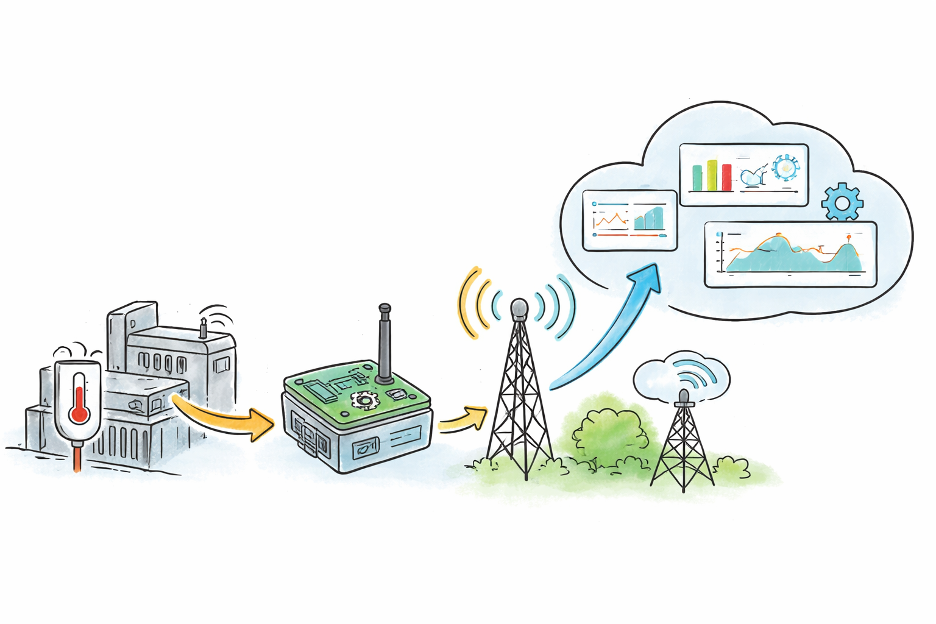
Throughout this series we have followed the journey of data through a modern embedded system. What starts as a physical signal in a sensor eventually becomes information that can be stored, analyzed, and used to make decisions in cloud-based systems.
On the surface, this journey may look straightforward. Sensors produce data, devices transmit it, and cloud platforms process it. Modern tools make each step appear simple to implement.
In reality, building a reliable data collection system is rarely about solving a single problem. It is about designing a chain of decisions where every part of the system influences the others.
When these decisions are made independently, problems tend to appear later in development. Devices may generate more data than they can process. Communication channels may become overloaded. Systems may scale poorly once the number of deployed units begins to grow. And sometimes the data that finally reaches the cloud turns out not to be particularly useful.
The challenge is rarely the individual technologies. It is the lack of a coherent system perspective.
From Signals to Systems
In the first article we explored how physical signals from the real world are captured through sensors and converted into digital data. This is where every data system begins, but it is also where the first design decisions are made.
Sensor choice, sampling rates, and signal conditioning determine not only what information is captured, but also how much data will flow through the rest of the system.
The second article looked at what happens once those signals reach the embedded device. Raw data often needs to be filtered, interpreted, and structured before it becomes meaningful. This edge processing is where systems begin transforming raw measurements into information.
From there, the data needs to move beyond the device itself. Connectivity introduces a different set of challenges. Communication consumes processing time, memory, power, and network resources. Managing these constraints without disturbing the device’s primary task requires careful software design.
Finally, once data reaches cloud systems it enters a completely different environment. Storage, analysis, and integration with other systems become possible at large scale, but only if the incoming data has been structured and managed properly along the way.
Each of these stages may seem separate, but in practice they form a single continuous pipeline.
Why System Thinking Matters
Many modern development projects start with a clear goal: collect data from devices and make it available in the cloud. Because cloud infrastructure has become so powerful and accessible, it can be tempting to assume that most problems can be solved there.
But sending large amounts of raw data upstream is rarely the most effective approach. Communication links have limits, power consumption matters for many devices, and unnecessary data quickly increases both complexity and cost.
This is why the role of the edge has become increasingly important. By processing data close to where it is generated, devices can reduce the amount of information that needs to travel through the system while still preserving the signals that truly matter.
Designing this balance is one of the central challenges of modern embedded systems. Too little processing at the edge leads to inefficient communication and cloud overload. Too much complexity inside the device can make systems harder to maintain and update.
The right solution depends on understanding the entire data pipeline rather than optimizing individual parts in isolation.
Systems That Grow Over Time
Another important aspect of data collection systems is that they rarely remain static. What begins as a prototype or a small pilot installation often grows into something much larger.
A system that works well with a handful of devices may behave very differently once hundreds or thousands of units are deployed. Communication patterns change, data volumes increase, and operational aspects such as firmware updates and device management become critical.
Because of this, successful systems are usually designed with their future lifecycle in mind. Decisions made early in development influence how easily a system can scale, evolve, and integrate with new services later on.
In many ways, the architecture of a data collection system determines its long-term flexibility.
Engineering the Data Pipeline
Looking across the entire chain—from sensor to cloud—it becomes clear that building reliable data systems is less about assembling components and more about engineering how information moves through the system.
Sensors must provide signals that can be interpreted reliably. Embedded software must process these signals without disturbing the device’s primary function. Connectivity must be managed so that communication does not overwhelm limited resources. And cloud systems must receive data that is structured in a way that supports meaningful analysis.
When these elements are designed together, the result is a system where each part supports the next stage in the pipeline.
When they are not, complexity tends to accumulate in unexpected places.
Turning Data Into Insight
Modern connected products are no longer just devices. They are distributed systems that link physical measurements with digital infrastructure.
The real value of these systems emerges when information can move efficiently from the physical world into environments where it can be interpreted, analyzed, and acted upon.
Achieving this requires an understanding that spans both embedded engineering and large-scale data systems. It requires thinking about signal processing, software architecture, communication strategies, and cloud integration as parts of the same design problem.
Designing Systems Together
At Zellaco, this system perspective is central to how we approach product development. Many of the projects we work on involve exactly this type of challenge: helping companies design reliable paths for data to travel from sensors and embedded devices all the way to the systems where it becomes valuable information.
Because we work across both embedded software and connected systems, we often help customers bridge the gap between the physical device and the digital infrastructure around it. This includes everything from signal processing and edge software to communication strategies and integration with cloud platforms.
When these pieces are designed together from the start, the result is not just a connected device, but a well-engineered data collection system that can grow and evolve over time.
And ultimately, that is what turns measurements into insight.